
Why Copilot Cowork Changes Your Cost Model
From Per-User License to Consumption Billing
Cowork requires the $30 Microsoft 365 Copilot license just for access. Once a user is licensed, actual usage is billed separately through Copilot Credits — the same currency already used for Copilot Studio agents and Work IQ APIs. Simple prompts cost less; complex, multi-step tasks that pull from SharePoint, Teams, and other connected systems cost more.
How Copilot Credits Actually Work
Capacity Packs, Pre-Purchase Plans & Pay-As-You-Go
Credits draw from three sources, in a fixed order:
- Capacity packs — shared, prepaid credit pools
- Pre-purchase plan — an annual commitment tied to an Azure subscription
- Pay-as-you-go — metered billing through Azure once the above are exhausted
Admins can also disable capacity pack drainage entirely and bill straight through Azure.
Setting Up Spending Policies
Tenant-Wide vs. Group-Level Policies
A default tenant-wide policy is mandatory — Cowork simply won’t run without one. Beyond that, admins can layer group-level policies, for example a higher monthly limit for a marketing team versus a lower one for casual users, each tied to its own security group and Azure subscription or resource group.
One common worry: what happens if a task is mid-run when the limit hits? The task still completes, but billing stops exactly at the policy cap — no overage is charged.
Who Can Manage Cost Management
| Role | Access to Cost Management |
|---|---|
| Global Admin | Yes |
| Billing Admin | Yes |
| License Admin | Yes |
| AI Admin | Yes |
| AI Reader | No (under review) |
Step-by-Step: Configure Your First Policy
- Open the Copilot pane in the Microsoft 365 admin center
- Select Cost Management → Get Started
- Set a tenant-wide monthly credit limit and an optional per-user cap
- Add alert thresholds (e.g., 90% of limit) for email notifications
- Add group-level policies where needed, choosing billing source and enabled services
If you want more posts like this on Copilot governance and adoption, subscribe to the blog for updates.
Social Proof
Microsoft’s own product teams have used Cowork internally for tasks like drafting customer briefings and status reports, citing it as a meaningful shift in daily workflow rather than a bolt-on feature.
FAQ
What happens if a task runs out of credits mid-execution?
The task finishes, but Microsoft only bills up to the policy limit — the overage isn’t charged.
Can end users request more credits?
Yes, directly from within Cowork. The request routes to an admin in the Microsoft 365 admin center, and once approved, the new limit applies to the entire policy group, not just that user.
Chat vs. Cowork — which drains more credits?
Copilot Chat is manual, single-prompt interaction. Cowork runs autonomous, multi-step, multi-system tasks, which typically consume more credits per session.
Is Anthropic required as a subprocessor?
No. Model selection is configurable, and enabling any specific model, including Anthropic’s, depends on your organization’s own policies and regional requirements.
Can spending policies be managed programmatically?
Not yet, but it’s high on the roadmap. Two scenarios are driving this: routing credit requests into existing helpdesk tools like ServiceNow, and creating or updating spending policies at scale via API instead of manually through the admin center.
How do organizations typically structure tiered spending policies?
A common pattern is setting up low, medium, and high spending tiers tied to different security groups — a base tier for everyday users and a higher tier for power users — then moving people between groups as their usage patterns change.
Can Cowork hand off work to a prebuilt agent?
Rather than a formal handoff, Cowork can call or invoke an existing agent as part of a larger task — for example, using a document-conversion agent as one step inside a broader Cowork assignment.
What’s next for end-user credit visibility?
Microsoft is actively working on showing individual users their remaining credits, their assigned policy, and usage trends directly inside the Copilot and Cowork experience, mirroring the visibility admins already have.
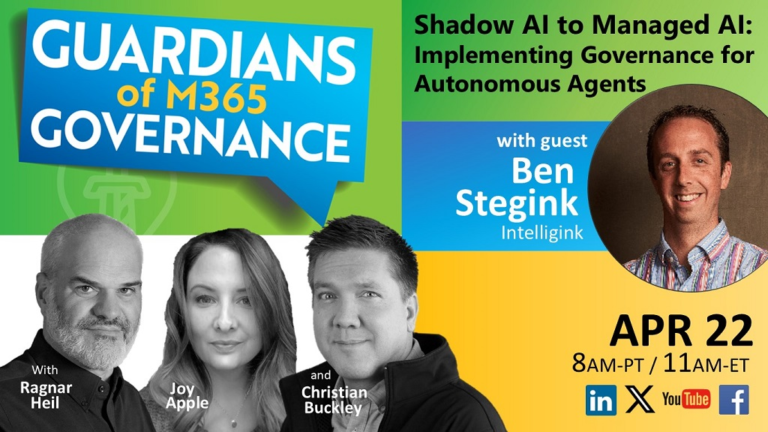
Watch this this “Ask me Anything (AMA)” Video on YouTube:
PS: Ready to implement proper AI agent governance? Contact me, Ragnar Heil, for a consultation on Agent 365, SharePoint Advanced Management, Microsoft Purview (Information Protection, Data Loss Prevention Policies, DSPM for AI), Rencore Governance, EasyLife365 Collaboration, Solutions2Share, ShareGate Protect, Data&More or Agent 365 deployment strategies tailored to your organization’s needs. Find my calendar here at our HanseVision Governance Landing Page. Pssst… I am also offering an exquisite M365 Copilot & Agents MasterClass. Find out more here.

What an insightful post on cost models with Copilot Cowork! I appreciate how you highlighted the shift in financial dynamics — it’s a game-changer for many businesses. Have you considered the potential impact of collaborative tools like those from speedstars? They can enhance team cohesion while optimizing costs further. Combining these elements might really elevate both productivity and innovation in coworking spaces!